Understanding Pitta Dosha: An Ayurvedic Guide to Balance
Ayurveda, the ancient healing tradition of the Indian subcontinent, describes the body through three governing energies, or doshas: Vata, Pitta and Kapha. Pitta is the fire-and-water energy responsible for digestion, metabolism and the conversion of food into usable energy. In balance, it gives us sharpness of mind, drive and warmth. Out of balance, it tends to show up as heat, in the body and in temperament.
What Pitta Governs
Pitta oversees far more than digestion. It shapes how clearly we think, how quickly we process emotion, and how our hormones and enzymes regulate themselves through the day. A well-balanced Pitta type is often decisive, focused and naturally motivated. When Pitta runs high, though, that same fire can tip into irritability, inflammation and burnout.
- Acid reflux, heartburn or a generally sensitive stomach
- Skin that flushes, breaks out or feels unusually warm
- Short temper, frustration or a racing, overactive mind
- Sensitivity to heat and excessive sweating
- Sharp hunger or thirst, and difficulty settling into sleep
- Headaches, eye irritation or premature greying
Left unaddressed over time, high Pitta is associated in Ayurvedic thinking with gastritis, liver strain and inflammatory skin conditions – which is why the tradition focuses on cooling the system before symptoms escalate.
Cooling the Fire: Diet and Lifestyle
Ayurveda’s approach to Pitta is almost entirely about temperature and pace. The idea is to bring more sweetness, moisture and calm into daily life, and less heat, acid and urgency.
Foods that tend to soothe Pitta include sweet fruits such as melon and pear, dairy in moderate amounts, whole grains, and cooling vegetables like cucumber and leafy greens. Herbal infusions of mint, fennel or coriander are traditional favourites. On the other side, spicy and fried food, excess caffeine and alcohol, and sour or fermented foods are generally the first things to reduce.
Lifestyle matters just as much as diet. A steady eating and sleeping schedule, time spent away from direct sun, and calming practices such as meditation or gentle swimming all help take the edge off an overheated system.
Traditional Herbs for Pitta
A handful of herbs recur again and again in Ayurvedic texts for cooling Pitta: Amla for its vitamin C and liver-supporting properties, Brahmi for a quieter mind, Neem for the skin, Shatavari for hormonal balance, Guduchi for gentle detoxification, and liquorice root for digestive comfort. None of these replace medical care, but they illustrate how consistently Ayurveda reaches for cooling, grounding remedies over stimulating ones.
How We Support Pitta Balance at Rekawa
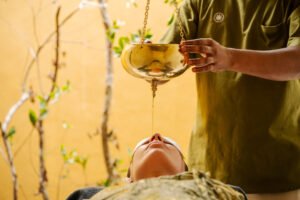
At Rekawa Wellness Resort, our approach to Pitta draws on the same principles that have guided Ayurveda for centuries, adapted to a shorter, more accessible stay. Our Ayurvedic practitioners begin with a simple consultation to understand your constitution, then shape your time with us accordingly – whether that means a cooling herbal-oil massage through our Beauty & Massage menu, a gentler pace of daily yoga, or a short, guided element of our Weight Loss & Detox programme to help settle an overactive system.
The goal is never intensity for its own sake. It’s the quieter work of helping your body find its own temperature again – which, fittingly, is very much in keeping with the art of doing less.

The Final Word
Balancing Pitta is less about correcting a flaw and more about respecting a rhythm. A cooler diet, a steadier pace and a little Ayurvedic wisdom go a long way. If you notice the signs of excess heat building up in your own life, it may simply be time to slow down – and Rekawa is a good place to do exactly that.