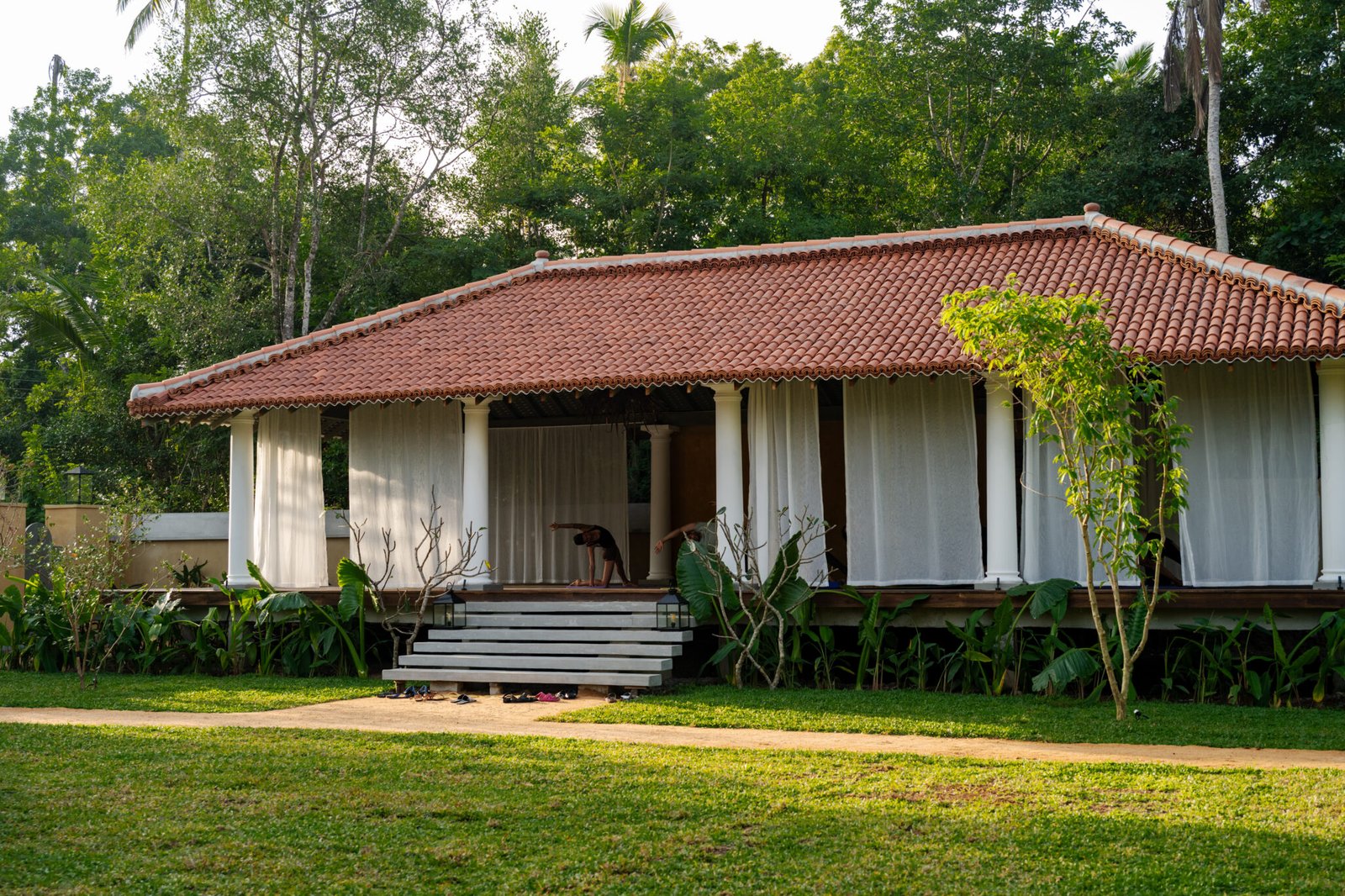
The first question most people ask about a yoga retreat is usually a version of the same thing: “But what if I’m not very good at yoga?”
It is an understandable worry. Photographs of retreats can make the whole experience look as though it belongs to people who already own the right clothes, know the Sanskrit names and can balance on one arm at sunrise. In reality, a well-chosen retreat should not ask you to arrive as a finished version of yourself. It should give you a place to begin.
At Rekawa, yoga is one part of a wider rhythm that also includes Ayurveda, meditation, breathwork, nourishing food and unstructured time. The classes are open to all levels, and the purpose is not performance. It is to help you settle into your body, learn at a pace that makes sense and take a few useful practices home.
If you are considering your first yoga retreat in Sri Lanka, here is what to look for, what to ask and how to arrive without turning the experience into another thing to get right.
First, understand what kind of retreat you are choosing
Not every yoga holiday offers the same experience. Some are social beach breaks with a daily class. Some are focused entirely on meditation. Some combine yoga with surfing or intensive fitness. Others, like Rekawa’s bespoke retreats, use yoga as one part of a personalised wellbeing stay.
The best choice begins with your real intention. Are you hoping for rest after a demanding year? A gentle reintroduction to movement? Time away from screens? A structured way to explore Ayurveda? Or are you looking for a serious period of practice with a defined teacher and group?
There is no superior answer. The point is to avoid booking a programme that asks for something different from what you need. If your main hope is to rest, a tightly scheduled programme with multiple classes and excursions every day may not feel restorative. If you want to deepen an established practice, a retreat with only occasional drop-in classes may feel too light.
A retreat is not the same as teacher training
This distinction removes a great deal of unnecessary anxiety. A teacher-training course is usually designed to prepare participants to teach, often with a set curriculum, study hours, practice requirements and assessment. A beginner-friendly retreat is different: you attend to practise, rest, ask questions and learn about your own experience. You do not need to arrive knowing how to cue a pose or explain yoga philosophy to anyone else.
Before booking, ask the provider to state clearly whether the programme is a restorative retreat, a workshop, a teacher-training course or a hybrid. If it is presented as suitable for beginners, ask what that means in practice.
What “beginner friendly” should actually mean
“All levels welcome” is a useful starting point, but it is not enough on its own. A thoughtful retreat should be able to explain how a newcomer is welcomed, how options are offered and how a guest can communicate their needs.
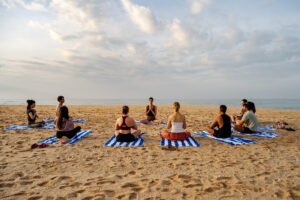
At Rekawa, the current bespoke programme includes two 90-minute yoga sessions each day — one at sunrise and one at sunset — with meditation and pranayama woven through the practice. The resort states that classes are suitable for all levels and that teachers adapt the practice to the people in the room. Cushions, benches and props are provided for the meditation elements.
That does not mean every pose will feel effortless, nor should it. It means you should be able to approach the practice without pretending you are more experienced than you are. In a good class, asking a question is normal. Resting is normal. Choosing a simpler option is normal.
The questions worth asking before you book
Most disappointment comes from unspoken assumptions. A few practical questions can tell you far more than a polished photograph.
What does a typical day look like?
Ask for an outline rather than an exhaustive timetable. On a bespoke stay at Rekawa, mornings begin with yoga, followed by breakfast and personalised treatments; afternoons retain room for rest, reading, swimming or programme-specific workshops; and a slower yoga practice comes at sunset. This is a rhythm, not a boot camp.
How much personal attention is available?
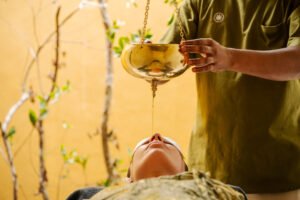
For a first retreat, it helps to know who will answer your questions. Rekawa’s programmes begin with an Ayurvedic consultation, and the team shapes the stay around the guest’s time and stated focus. That is different from a fixed group course in which everyone follows the same schedule.
Is there enough time to do nothing?
This may be the most important question. A retreat with no blank space can leave you more tired than when you arrived. Treatments, meals and yoga have more room to land when the afternoon is not treated as a gap to be filled.
What is included, and what is not?
Ask for written confirmation of accommodation, meals, consultations, treatments, classes, service charges, transfers and any additional costs. Do not assume that yoga equipment, laundry, airport transport or excursions are included because they appear in a photograph or on another traveller’s review. Rekawa invites guests to make a direct booking enquiry so the team can confirm the right programme and quote for the dates requested.
Can I come alone?
Yes — and many people do. Rekawa says that most guests arrive solo, while shared meals and group practice make it easy to meet others if that is what you want. Its fourteen-room setting also means there are private ensuite rooms and quiet outdoor space to return to between activities. You do not have to choose between being sociable and protecting your own time.
Preparing your body without turning preparation into pressure
You do not need a pre-retreat transformation plan. You do not need to become more flexible before you are “allowed” to come. The simplest preparation is to make your arrival easier.
- If you have time, try a beginner class or a short, gentle practice at home so the first session feels familiar rather than foreign.
- Tell the team honestly about any injury, health condition, pregnancy, medication, allergies or worries before you arrive. This helps them advise you properly; it is not something to push through quietly.
- Bring comfortable clothes you can move and breathe in. You do not need specialist yoga fashion.
- Travel with a little margin if possible. Arriving from a long flight and immediately trying to keep up with a full programme is hard on anyone.
- Leave room in your expectations for rest. A retreat is not a test of discipline.
For a more personalised arrival, share any preferences or questions with the Rekawa team in advance; they can help you understand the rhythm of your chosen stay.
What the first two days often feel like
The first morning can be both lovely and awkward. You may wake before sunrise in an unfamiliar room. You may feel self-conscious when you unroll a mat beside people who seem to know what they are doing. You may be surprised by how early 90 minutes feels when you are used to moving only after coffee.
None of this means you chose badly.
Give yourself permission to be new. Introduce yourself to the teacher. Say that it is your first retreat. Mention a movement that does not feel good. Let the practice be a conversation rather than a performance. And if all you manage on the first afternoon is a swim, a nap and a quiet meal, the day has not been wasted.
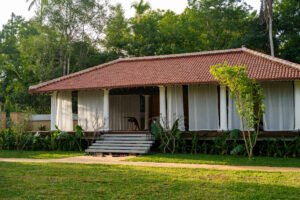
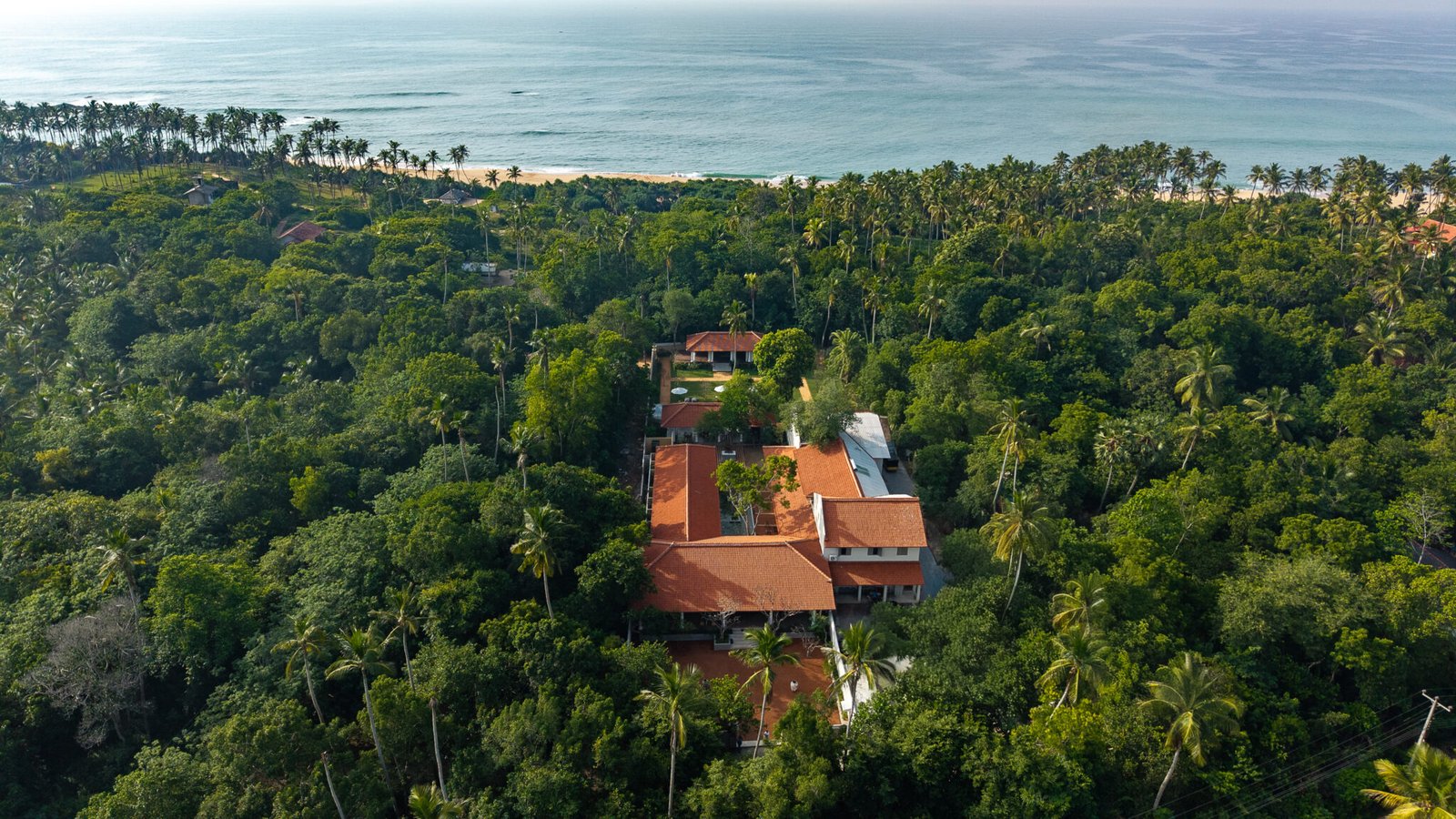
Rekawa’s setting helps with this. The resort sits in coastal forest near Tangalle, a short walk from the turtle-nesting beach, with gardens and communal areas as well as private rooms. The programme is designed to be personal rather than prescriptive: some guests want an active, yoga-forward week; others need a quieter stay with very little on the schedule.
What to bring — and what not to overthink
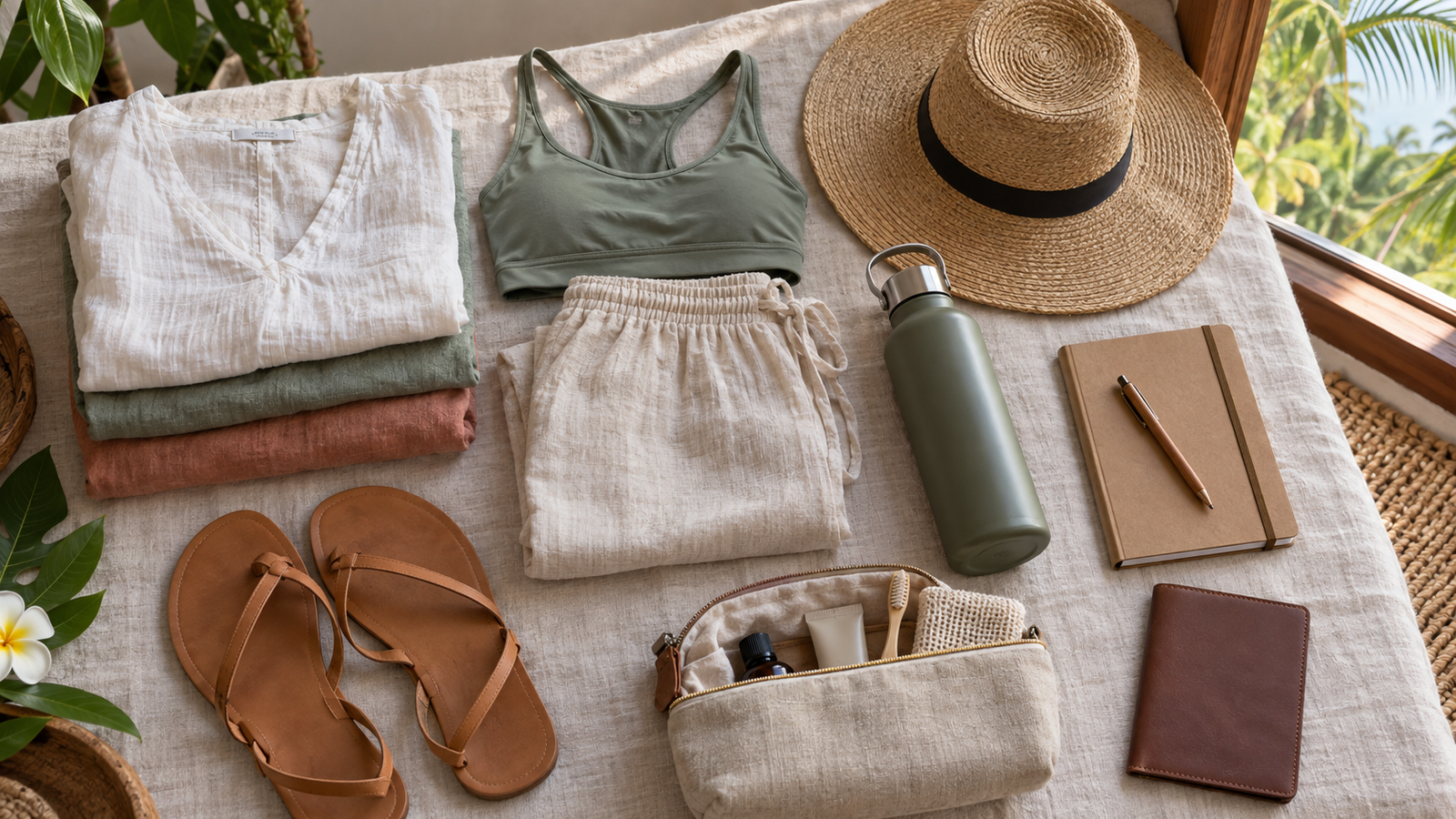
Bring the practical essentials you would take to a warm coastal destination: breathable clothes, a light layer for early mornings or air-conditioned rooms, sandals, sun protection, swimwear, a reusable water bottle, any medication you need, travel documents and a notebook if you like writing things down.
Then stop. You do not need to buy a new identity in linen.
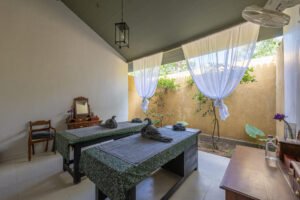
The Rekawa accommodation guide confirms organic cotton linens, private ensuite bathrooms and energy-efficient air conditioning in its rooms. It does not confirm every practical detail a traveller may want to know, so check directly about laundry, transfers, yoga-mat provision, power adaptors and specific toiletries before packing around them.
How to make the retreat useful after you leave
The most valuable part of a first retreat is rarely the moment you finally manage a difficult pose. It is often something quieter: a breathing practice you remember during a stressful meeting, a morning stretch that makes you feel more present, or the realisation that one unplanned evening a week matters.
Before you leave, choose one thing you genuinely want to continue. Ask the teacher to help you make it small enough to fit your ordinary life. Perhaps it is ten minutes of movement twice a week. Perhaps it is a few breaths before dinner. Perhaps it is simply refusing to schedule every weekend morning.
Rekawa’s longer stays can include a personalised home-practice sequence and practical integration tools, but you do not need to wait for a long retreat to take something meaningful away. The practice should make your life more inhabitable, not more complicated.
A first-retreat checklist
Before you press “enquire”, make sure you can answer these questions:
- What do I most want from this time away: rest, movement, learning, connection or quiet?
- Is the retreat explicitly suitable for my experience level?
- What does a normal day contain, and how much open time is there?
- Who can I tell about injuries, medication or other needs?
- What exactly is included in the quote?
- Can I arrive and leave on dates that work with my travel plans?
- What is one small thing I hope to carry home?
If the answers make you feel calmer rather than more intimidated, you are probably looking in the right direction.
Begin where you are
Your first yoga retreat does not require flexibility, spiritual credentials or a perfected morning routine. Curiosity is enough. A good retreat will meet you there, then give you the time and guidance to find your own rhythm.
Explore Rekawa’s wellness retreats or send a booking enquiry with your dates, experience level and what you would like from the stay. The team can help you decide whether a one-day introduction, a shorter journey or a longer bespoke retreat is the right fit.