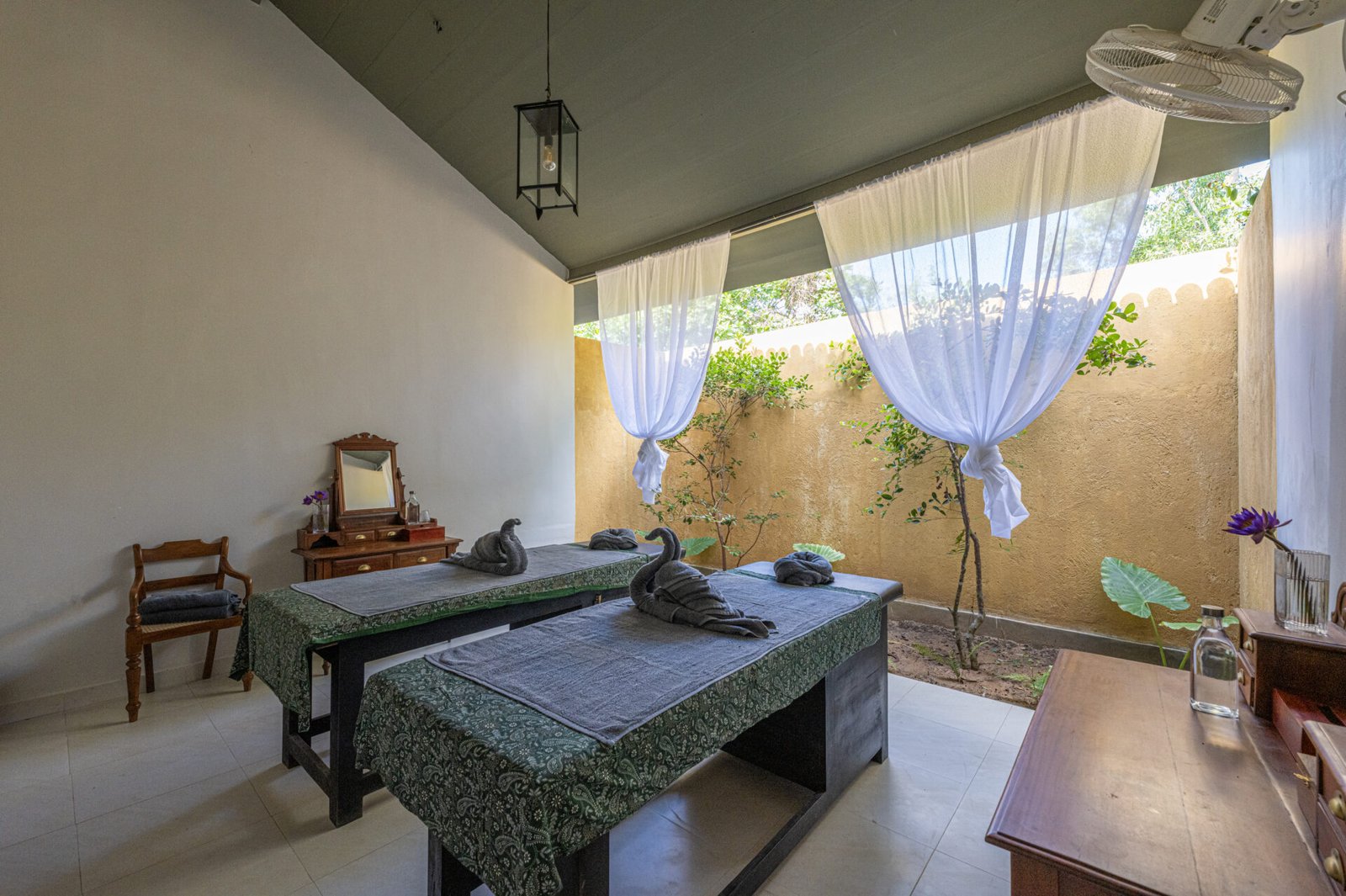
An Ayurvedic massage at a Sri Lankan retreat is often imagined as a spa treatment with warm oil and a beautiful setting. It can certainly be deeply calming. But when it is part of an Ayurveda-led stay, the intention is usually broader than a one-off relaxation appointment. The treatment may follow a consultation, sit within a wider daily routine, and be chosen alongside food, rest, yoga or other therapies.
That does not make every session mysterious or complicated. It simply means it is worth asking a few good questions before you arrive. What kind of treatment is being offered? Who selects it? How much pressure will be used? What should you wear? What happens if you feel uncomfortable? A thoughtful retreat should welcome those questions.
This guide offers a clear introduction to Ayurvedic massage, including what may happen in a session and how to make the experience your own.
What does “Ayurvedic massage” mean?
“Ayurvedic massage” is a broad everyday description rather than one single, identical service. In an Ayurveda setting, a practitioner may consider your current needs, constitution and medical history before recommending an approach. Some therapies involve oil and massage-like touch; others are entirely different treatments.
The current Ayurveda page at Rekawa Wellness Resort says its programmes begin with a personal consultation and lists therapies including Abhyanga and Shirodhara. That tells prospective guests that treatment selection is intended to follow an assessment, but your own programme, treatment duration and suitability should be discussed directly with the resort.
In traditional Ayurvedic practice, the context matters. The practitioner may ask about sleep, appetite, energy, digestion, daily routine and the rhythm of your stay, shaping the experience around what you hope for from your visit.
How is it different from a familiar spa massage?
A conventional spa massage is often chosen from a menu: Swedish, deep tissue, sports or relaxation, with a stated time and pressure preference. Ayurvedic massage may include some of the same pleasures — skilled touch, oil, warmth and an invitation to slow down — but is often selected as part of a larger Ayurvedic treatment plan.
The distinction is not that one is “better” than the other. It is about purpose and process.
| A typical spa booking | An Ayurveda-led retreat treatment |
|---|---|
| You often choose a named massage and duration in advance. | A practitioner may recommend a therapy after consultation. |
| The focus is commonly immediate comfort, relaxation or muscular tension. | The treatment may be placed within a wider routine of rest, food, movement and follow-up. |
| The menu and pressure options are usually standardised. | Oils, sequence and frequency may be adapted, subject to assessment and suitability. |
| One appointment may stand alone. | A course of treatments may be discussed as part of a residential programme. |
Both approaches can be deeply enjoyable. The distinction lies in the setting, the consultation and the way the experience is woven into the overall rhythm of the retreat.
Abhyanga and other terms you may hear
You may encounter Sanskrit terms during an Ayurveda stay. They can sound intimidating at first, but a good practitioner should explain them without making you feel as though you need to have studied Ayurveda in advance.
Abhyanga
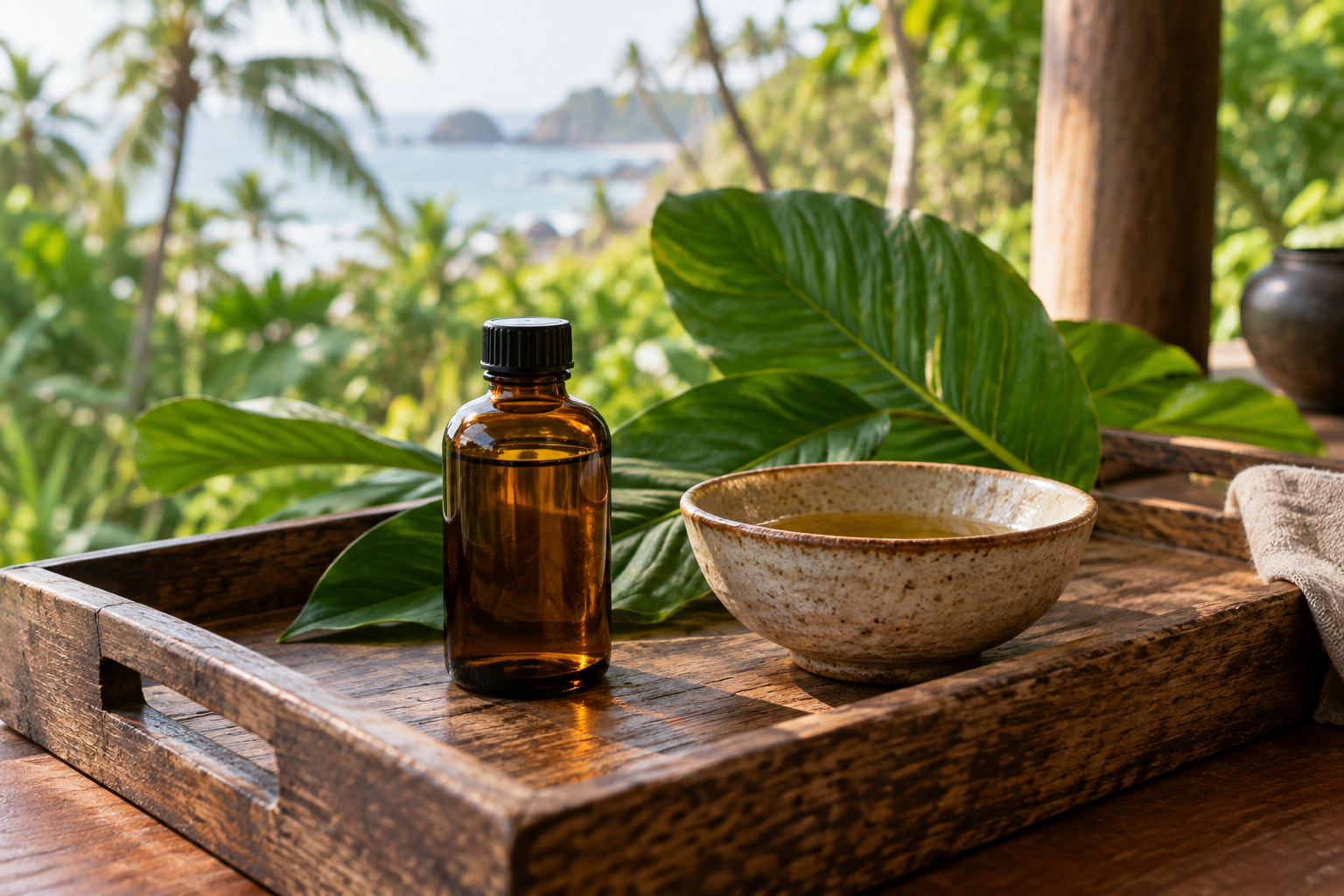
Abhyanga is commonly used to describe a traditional oil massage. In a retreat setting, this may involve warmed oil and a planned sequence of strokes. The exact oil, amount of pressure, body areas treated, duration and whether one or two therapists are involved can vary; the Rekawa team can explain the experience offered during your stay.
Shirodhara is not simply a massage
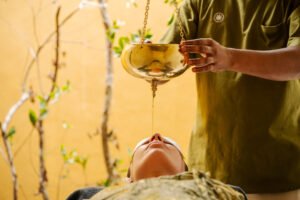
Shirodhara is often mentioned alongside massage, but it is a distinct therapy rather than a standard back, neck or full-body massage. It is commonly described as involving a steady stream of warm liquid applied to the forehead area while you rest. Whether it is appropriate for you should be determined by a suitably qualified practitioner. If you are curious, ask what will happen before, during and after the session — and what alternatives are available if it does not feel right for you.
Other therapies
Ayurveda programmes may also include steam, herbal preparations, movement practices or dietary guidance. They are not all forms of massage, and they should not be presented as interchangeable. Ask for a written or spoken explanation of each recommended therapy in plain English, including its purpose in the programme, duration, products used and any practical preparation.
What happens before an Ayurvedic massage?
Before your first treatment, expect some form of conversation or consultation. You may be asked why you have come, whether you have had treatments before, and whether there are areas you would like the therapist to avoid. This is the right time to be precise.
Tell the practitioner if you have:
- allergies or sensitivities, particularly to oils, fragrances or herbs;
- a skin condition, wound, sunburn or active infection;
- recent surgery, injury, blood-clotting concerns or a condition affecting circulation;
- pregnancy or the possibility of pregnancy;
- a history of trauma, anxiety or discomfort with touch;
- medication or supplements that could be relevant to treatment choices.
You do not need to disclose more than is necessary for your safety and comfort, but clear information helps the team make responsible choices. If you are unsure whether something matters, mention it. A careful practitioner would rather discuss it than guess.
What happens during the session?
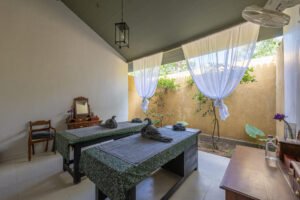
The treatment room should feel private, clean and comfortably warm. Before treatment begins, the therapist should explain the plan and give you a chance to ask questions. You should know the approximate duration, which body areas may be worked on, whether oil will be used and how to signal if you need a pause.
Oil choice and skin comfort
Oil is central to many Ayurvedic massage traditions. Ask the team about the oil or preparation planned for your session and how it will complement the experience.
Pressure and pace
There is no virtue in enduring a pressure level you dislike. A treatment can be light, moderate or firm, and your preference can change during the session. If something feels too intense, ticklish, cold, painful, rushed or simply wrong, say so immediately. You can ask for less pressure, a different area, a pause or for the treatment to end.
Useful phrases include: “Could you use lighter pressure, please?”, “Please avoid my shoulders today,” “I need a moment,” and “I would prefer to stop.” You do not need to justify any of them.
Privacy, clothing and draping
Massage customs vary across countries and providers. Clothing, underwear, draping and the parts of the body treated should be discussed before you enter the treatment room. At every stage, you should be offered privacy to change and be appropriately covered except for the area being worked on. You may request a therapist of a particular gender where available, ask for an additional staff member to be present, or decline any element of the treatment.
Consent is part of the treatment
The most reassuring sign of a professional treatment is not an elaborate menu; it is a practitioner who listens. Consent is ongoing. Saying yes to a massage does not mean saying yes to every technique, body area or product for the entire appointment.
Before a session, you can ask:
- What exact treatment do you recommend, and why?
- Which oil or product will you use, and what is in it?
- Which body areas will be included or excluded?
- How will I be draped, and what should I wear?
- Can I ask for lighter pressure, a pause or an early finish?
- What should I do if I feel unwell, uncomfortable or have a reaction afterwards?
- Is there anything I should avoid before or after the treatment?
These are normal questions, not difficult ones. A retreat that values personal care should answer them calmly and without pressure.
What might you feel afterwards?
People respond differently to bodywork. You may feel relaxed, sleepy, warm, oily, thirsty, emotionally quiet or simply ready for a shower and an early night. A retreat may suggest rest, water or a gentle schedule after treatment; follow individual advice from your practitioner rather than assuming a universal rule.
After your treatment, take a little time to rest, drink water and enjoy the quieter rhythm of the retreat.
Choosing a retreat treatment with confidence
You do not need prior experience of Ayurveda to enjoy a treatment at a Sri Lankan retreat. Curiosity, honest communication and sensible boundaries are enough. Begin with a consultation, ask what is actually offered, and choose only what feels appropriate for you.
At Rekawa, the live Ayurveda information and Bespoke Retreats page describe Ayurveda as part of a broader residential experience. Use those pages as an introduction, then ask the team to confirm current treatments, practitioner availability, medical considerations and the details of your individual programme.
Would you like to discuss a restorative stay and the treatments that may be suitable for you? Send an enquiry to Rekawa Wellness Resort and share your dates, preferences and any practical questions in confidence.