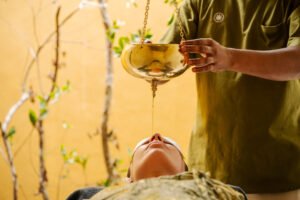
Shirodhara is one of the Ayurvedic treatments people often recognise by sight before they know its name: a steady stream of warm liquid, traditionally oil in many forms of the treatment, directed over the forehead while the guest rests.
It is an image that can make Shirodhara look wonderfully simple. Yet the useful questions are not only “What is it?” but also “Who chooses it?”, “What exactly will happen?”, “What should I tell the practitioner first?” and “What can I reasonably expect?”
At a considered Ayurvedic retreat, Shirodhara follows a personal conversation. At Rekawa, treatment plans begin with a consultation with the in-house Ayurvedic doctor, who considers your preferences, the rhythm of your stay and the therapies that will make the experience feel most harmonious.
This guide explains Shirodhara at a high level, separates the traditional context from unsupported medical promises and gives you the questions worth asking before you decide whether it is right for your stay.
What does “Shirodhara” mean in practice?
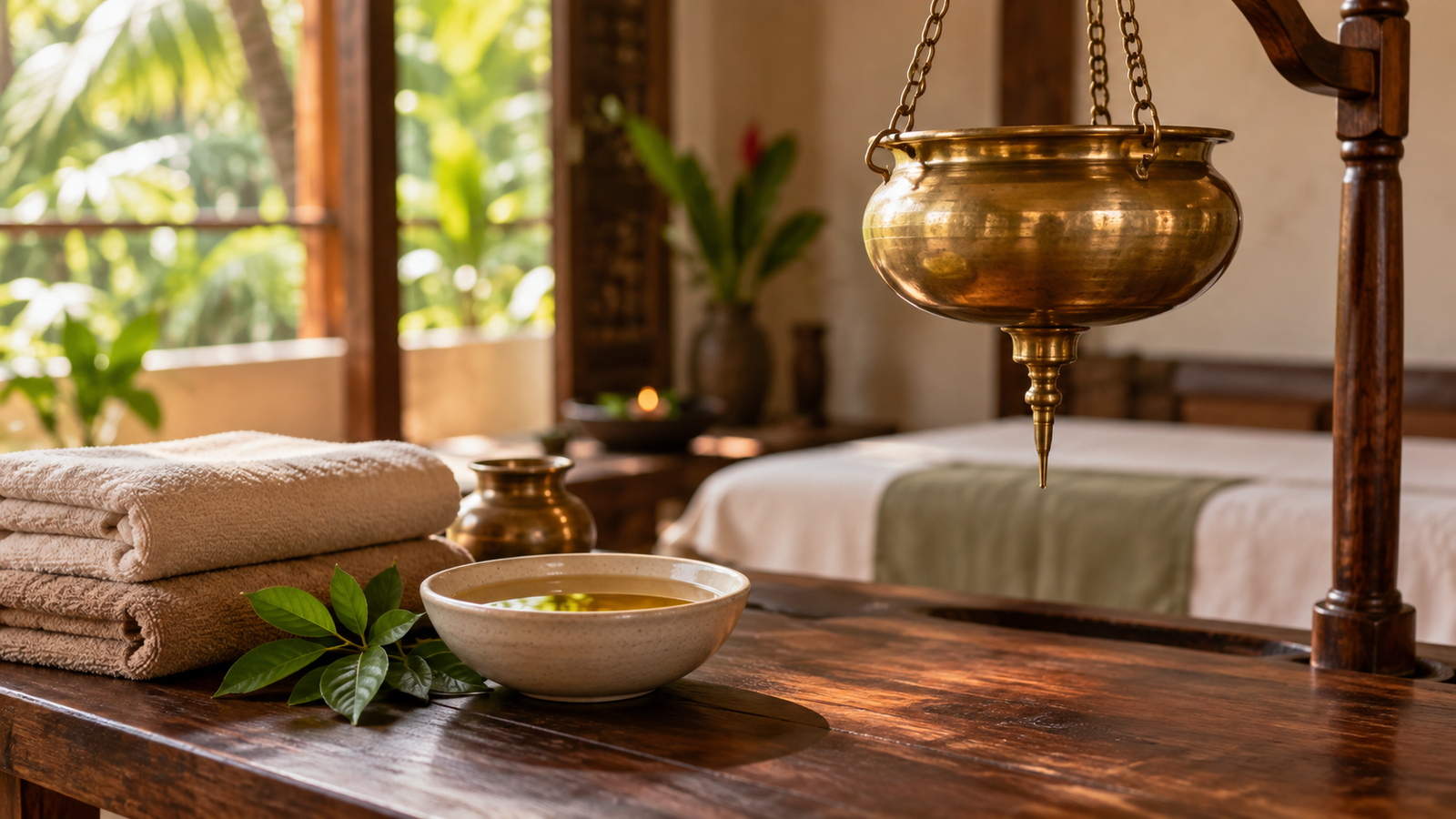
Shirodhara is an Ayurvedic oil-dripping therapy. Rekawa describes it as a treatment in which warm oil is poured in a continuous stream over the forehead; it appears alongside therapies such as Abhyanga and steam baths on the resort’s Ayurveda programmes page. In traditional settings, the exact liquid, temperature, duration, sequence and accompanying therapies can vary. That variation is one reason a consultation matters.
It is helpful to distinguish Shirodhara from an ordinary massage. A massage may involve broad manual work on muscles and soft tissue. Shirodhara is defined by the controlled flow of liquid over the head area while a guest rests. It may sit within a longer Ayurvedic treatment plan, but it is not interchangeable with every massage or offered in exactly the same way to every person.
Shirodhara belongs to a wider traditional system that brings together personal consultation, daily rhythm, nourishment and therapeutic practices. At Rekawa, it is considered as part of a thoughtful, individual retreat experience.
What happens before a session at Rekawa
The first step is not the oil. It is the conversation.
Rekawa’s approach is consultation-led: guests meet the resident Ayurvedic doctor, who assesses their individual constitution and current needs before treatments are chosen. In a bespoke retreat, that consultation sits alongside daily yoga, meals, rest and personalised therapies. In day programmes, the treatment also follows a one-to-one consultation rather than a self-selected generic spa menu.
Use that conversation well. Let the doctor or therapist know if you have a medical condition, take prescribed medication, are pregnant or nursing, have an allergy or sensitive skin, have had a recent procedure, or simply feel unsure about having oil applied to your hair or skin. These are not awkward details; they help the team decide whether a therapy is suitable and how it should be approached.
At Rekawa, a consultation helps the Ayurvedic doctor and treatment team shape a considered experience around your goals for the stay.
What a session may feel like
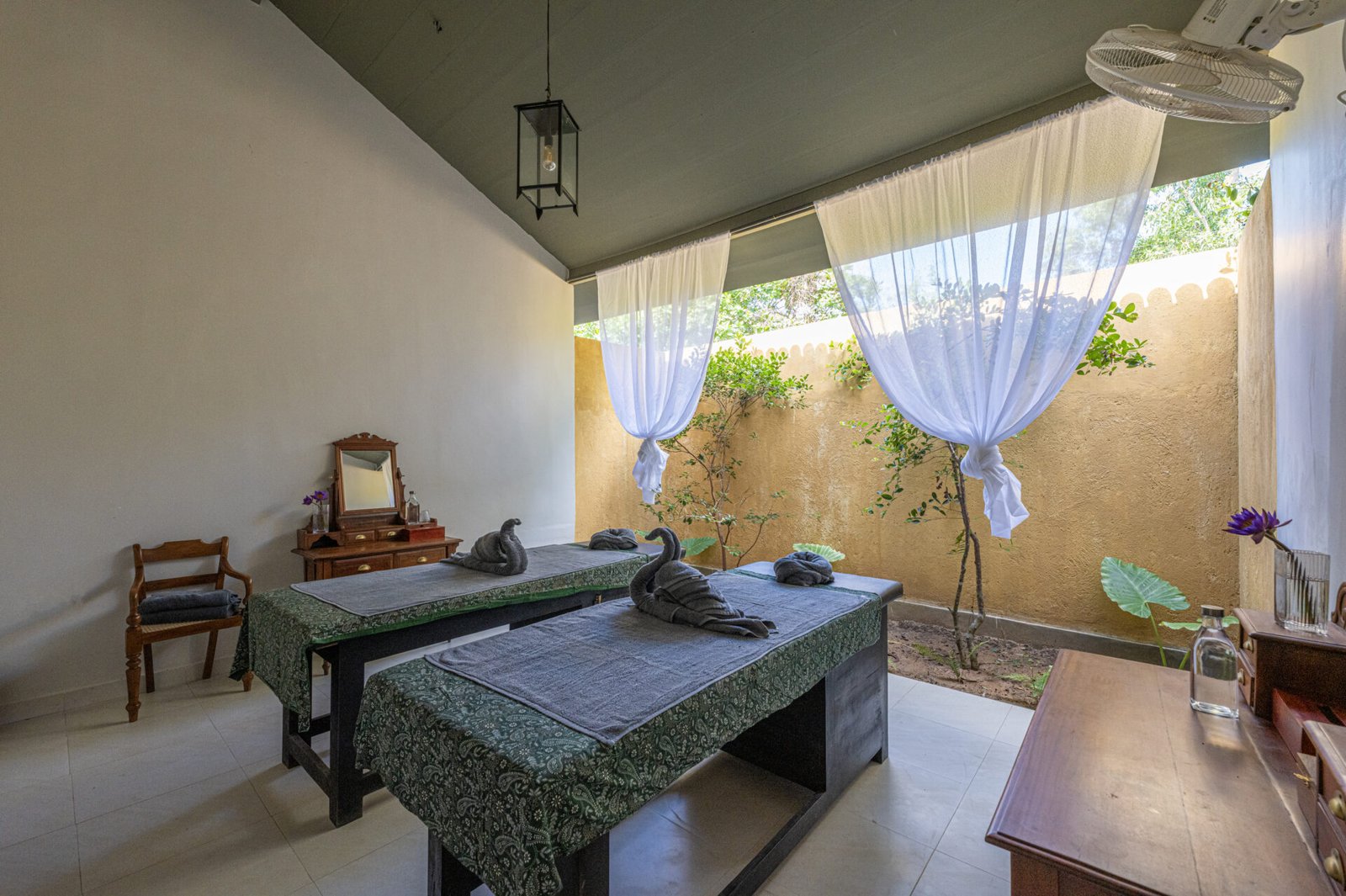
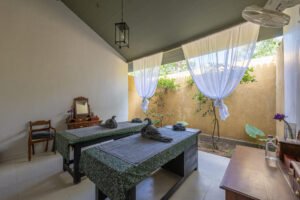
Every treatment room and every protocol is different, so it is better to describe the experience honestly than to write a scripted scene. Broadly, a guest lies or reclines comfortably while the practitioner works with a vessel designed to provide a continuous, controlled flow of warmed liquid over the forehead. The therapist may prepare the guest’s hair and head area, monitor comfort and explain what to do with eyes, clothing and towels.
The important word here is may. The length of the session, the liquid used, the temperature, whether another therapy is combined with it, what clothing or draping is used, and how long you are invited to rest afterwards are operational details. They should be confirmed by the treatment team for the exact booking, rather than assumed from an online article.
It is reasonable to ask for clarity before you begin:
- What will be used, and why was it selected for me?
- How warm will it be, and how do I let the therapist know if I am uncomfortable?
- How long is the treatment expected to last?
- Will oil be applied to my hair, and what should I bring or plan for afterwards?
- What should I wear, and how is privacy handled?
- Is there time to rest after the session?
- Is Shirodhara being offered on its own or as part of a wider plan?
Those questions do not make you a difficult guest. They help turn a beautiful-looking treatment into an informed choice.
Why personal selection matters more than a treatment trend
One reason Ayurveda can feel so personal is that it does not begin with a label on a menu. At Rekawa, the doctor consults with the guest before recommending a programme. For longer bespoke stays, treatments, food, yoga, breathwork and rest are arranged as parts of the same overall rhythm.
This is also why an article cannot tell you whether Shirodhara is right for you. Even people who are interested in the same treatment may arrive with very different histories, preferences and practical concerns. One person may be happy to have oil in their hair; another may find that idea stressful. One may want a gentle day treatment while travelling through the south coast; another may be discussing a longer, doctor-supervised programme.
The correct answer is not “everyone should try it.” The correct answer is “ask the practitioner, then decide with the right information.”
Shirodhara and a wider Ayurveda stay
For guests who want more than a single session, Rekawa offers several ways to enter the programme:
- Ayurveda day programmes for visitors staying in or near Tangalle.
- Bespoke Ayurveda and yoga retreats from one to fourteen days, with accommodation, meals, yoga and consultation-led treatments.
- A separate Panchakarma programme for guests considering a more intensive doctor-led cleansing stay. It is not a day treatment and should never be approached as a quick spa detox.
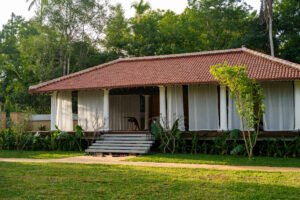
The setting matters too. Rekawa is in coastal forest near Tangalle, close to Rekawa’s turtle-nesting beach. The day is designed to have room around treatments: breakfast, rest, a swim or a walk, a gentler sunset practice. A therapy has more chance to feel restorative when it is not wedged between a long transfer and a crowded schedule.
How to prepare without overcomplicating it
You do not need to study Ayurvedic terminology before you arrive. You do need to be candid.
Before your consultation, write down what you would like the stay to focus on and any relevant health information you need to share. Bring a list of medications and supplements if it will help you remember. Tell the team about allergies or sensitivity to topical products. Ask what you should do with your hair after the session and whether you should avoid scheduling a beach trip, flight or other activity immediately afterwards.
After your session, allow yourself a little quiet time and follow the guidance shared by the treatment team, so you can make the most of the unhurried rhythm of the day.
Frequently asked questions
Is Shirodhara the same as a head massage?
No. It may be part of a broader treatment experience, but Shirodhara is characterised by a controlled flow of warm liquid over the forehead while the guest rests. Ask the team how it fits into your particular plan.
Do I need to know my dosha before I arrive?
Online quizzes can be fun starting points, but Rekawa’s approach begins with a personal consultation. The resident doctor can explain the traditional framework in the context of your stay.
Can I book it as a day visitor?
Rekawa offers individual treatments and structured Ayurveda day programmes to visitors in the Tangalle area. Availability and suitability should be confirmed directly with the team.
Make an informed enquiry
Shirodhara can be a quiet, memorable part of an Ayurvedic stay when it is selected with care as part of a thoughtfully planned retreat. If you are curious, send Rekawa an enquiry with your dates, whether you are visiting for a day or staying overnight, and any questions you want the doctor to consider. The team can tell you what is currently available and help you decide whether it belongs in your programme.