Somewhere between the in-breath and the out-breath sits a pause most of us never notice. The yogic tradition calls this space kumbhaka – retention – and treats it not as an accident of breathing but as a doorway. Not to somewhere new, but back to something that was always quietly present beneath the noise of ordinary life.
More Than Air
Prana is often translated simply as “breath”, but that undersells it. In the yogic view, prana is closer to the animating current running through all living things – the force that drives a seed toward light, a heart to keep beating without instruction. Pranayama, the deliberate shaping of breath, isn’t really about oxygen at all. It’s a way of working directly with that underlying current.
Each inhale carries in more than air; each exhale releases more than carbon dioxide. And in the brief stillness between the two, something becomes momentarily easier to notice – a quality of presence that isn’t manufactured by the breath, only revealed by it.
A Few Foundational Techniques
Different pranayama techniques serve different purposes, which is part of why the practice rewards patience rather than mastery of every method at once.
- Nadi Shodhana (alternate nostril breathing) – balances and evens out the nervous system
- Kapalabhati (skull-shining breath) – energising, used to clear mental fog
- Ujjayi (victorious breath) – a steady, audible breath often used to anchor attention during yoga practice
Why the Pause Matters Most
Many practitioners find the deepest shift doesn’t happen during the breath itself, but in the brief retention after it. Held without strain, that pause creates a kind of internal quiet the mind can’t easily fill with its usual chatter – and in that quiet, something in the nervous system genuinely settles.
Breath as a Bridge
What makes pranayama unusual as a practice is that breath is one of the only bodily functions we can consciously direct, even though it also runs on its own without our attention. That dual nature makes it a natural meeting point between the voluntary and the involuntary, the body and something quieter beneath it – which is likely why breath-centred practice shows up across so many contemplative traditions, from Sufi breathwork to Tibetan tummo.
Pranayama at Rekawa
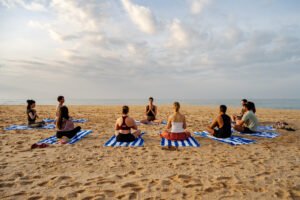
Breathwork is woven into daily yoga practice at Rekawa, whether as a brief grounding exercise before a morning class or a longer, guided session on its own. No prior experience is needed – only a willingness to sit with the pause for a little while and see what it reveals.