There is a particular kind of tiredness that does not disappear because you have finally stopped working. You arrive somewhere quiet, sleep a little longer, perhaps switch your phone off for an afternoon — and still the body seems to be waiting for the next demand.
That is why a good retreat is not simply a collection of treatments or a more scenic version of a spa break. Its value is in rhythm. Meals arrive at sensible times. Movement has a place in the day. There is room to rest after a treatment instead of rushing into the next thing. For a while, you do not have to design every hour for yourself.
In Ayurveda, daily rhythm is often discussed through the idea of dinacharya: a traditional approach to arranging the ordinary parts of life with more attention. It is an invitation to notice the small conditions that make a day feel more liveable: regular nourishment, movement you can sustain, quieter transitions and enough space to recover.
At Rekawa, those conditions are built into each bespoke stay, then adjusted following a consultation with the in-house Ayurvedic doctor. The aim is not to make guests imitate a perfect retreat timetable at home. It is to help them leave with a few habits that are realistic enough to keep.
What an Ayurvedic daily routine is — and is not
Ayurveda is a traditional system of health and wellbeing that brings together lifestyle, food, movement and therapeutic practices. Its rich cultural and clinical history offers a thoughtful frame for building a more attentive daily rhythm at home and on retreat.
That distinction matters. A daily routine can be supportive without becoming a list of promises about what it will cure. At its best, it is a framework for paying attention: how do you feel when you eat at a regular time? What happens when you leave a few minutes between one task and the next? Which evening habits actually help you settle?
There is no single “correct” Ayurvedic day. The details can change with a person’s circumstances, climate, family life and work. The traditions themselves place importance on individual constitution and current experience; Rekawa’s programmes begin with a personal consultation to shape a rhythm that feels personal and practical.
A sample day at Rekawa: structure without a stopwatch
The following is a picture of the resort’s general rhythm, not a promise that every guest will follow the same schedule. A bespoke stay may last from one day to fourteen, begin on a day that suits the guest’s travel plans, and change according to the consultation and chosen programme. The important point is the sequence: practice, nourishment, care and space — rather than a packed itinerary.
Sunrise: begin with movement and breath
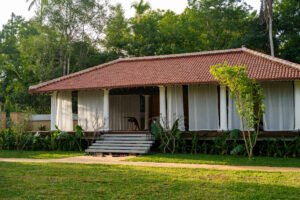
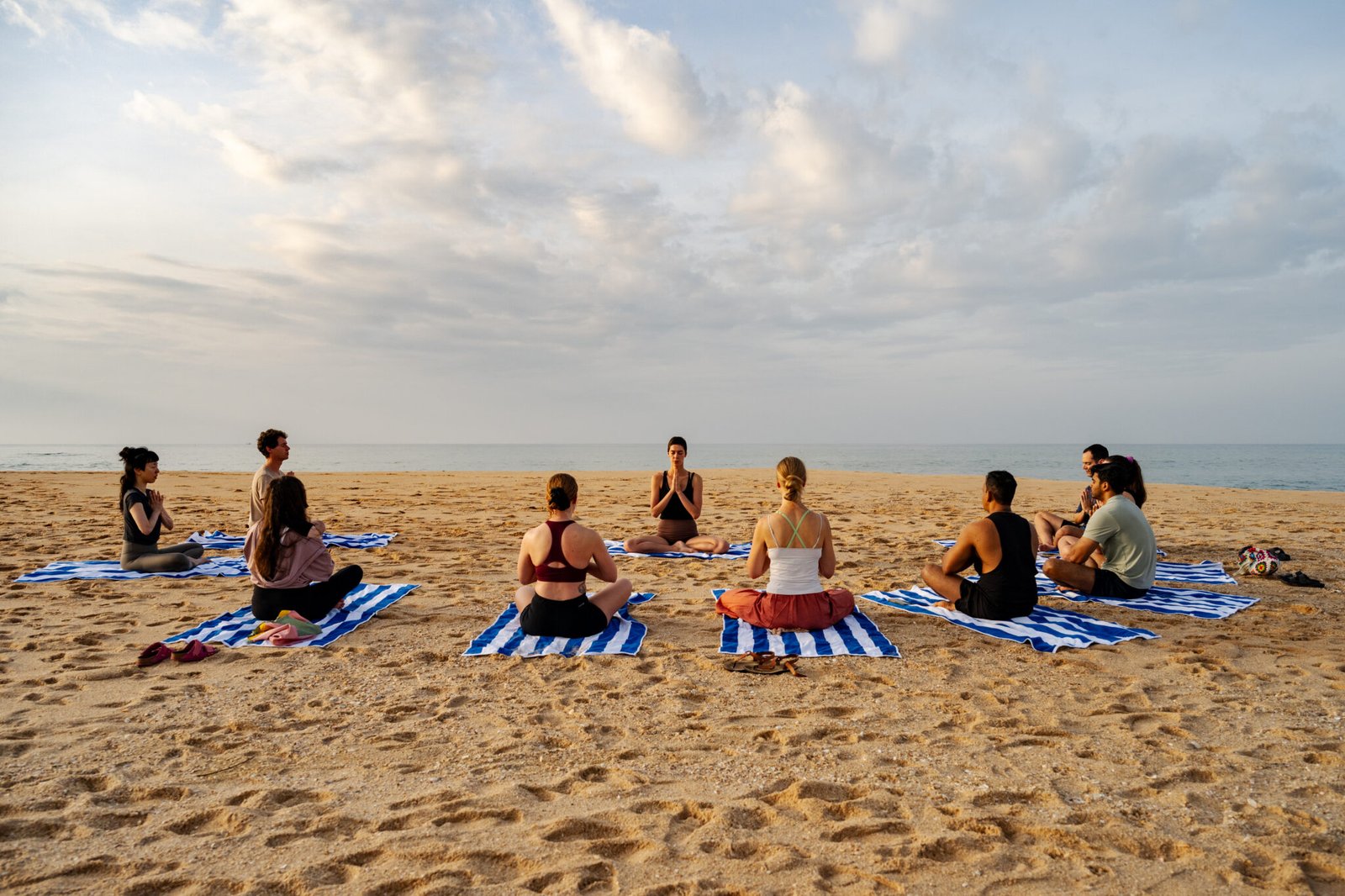
Mornings at Rekawa begin with a 90-minute yoga session in the open-air shala. Meditation and pranayama are woven into the practice, and classes are intended for all levels. The early hour is not about earning breakfast or becoming exceptionally flexible. It is a gentler way to arrive in the day before messages, choices and noise start multiplying.
For someone at home, the equivalent may be far smaller: five quiet minutes by an open window, a short walk before the day begins, a few unhurried stretches, or simply sitting with a cup of tea without scrolling. The usefulness lies in repetition, not in the length of the practice.
Morning: breakfast, consultation and personalised care
After yoga, the day moves towards breakfast and the treatments prescribed after the individual consultation. On Rekawa’s bespoke retreats, every guest receives an assessment with the in-house Ayurvedic doctor, personalised therapies, dietary and self-care guidance, and meals prepared according to Ayurvedic principles. The treatment is not selected from a generic spa menu; it is shaped around the guest’s time and stated needs.
That is a useful lesson to take home even if you never have an Ayurvedic treatment. A morning routine works best when it responds to your life rather than when it copies somebody else’s. The question is not “What should a perfect person do at 5am?” It is “What makes my morning less rushed and more considerate?”
Midday: let food be part of the day, not an interruption to it
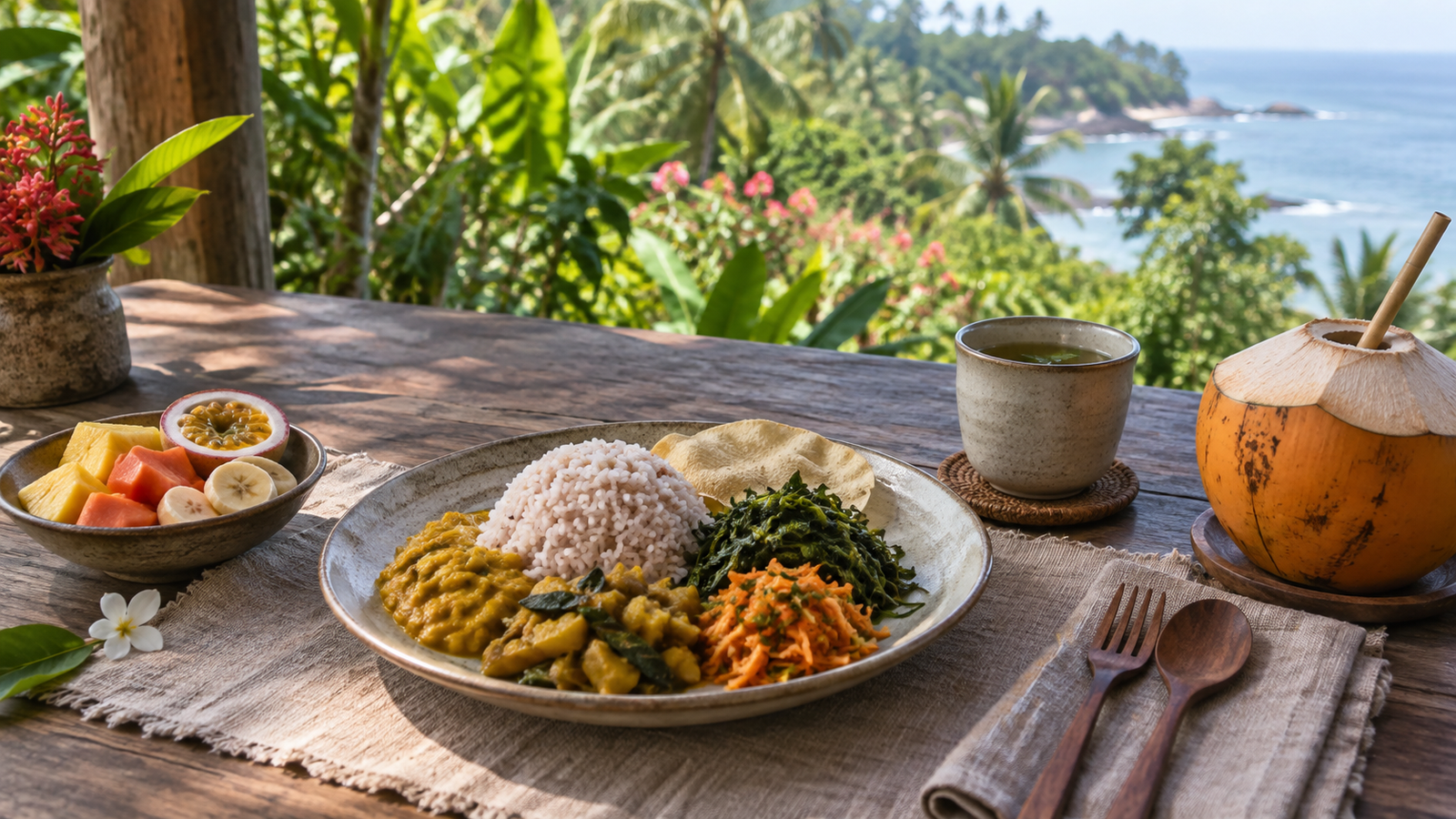
Lunch at Rekawa is prepared with ingredients from local farms and the resort’s gardens, with vegetarian and vegan choices available. The kitchen’s approach is seasonal and rooted in Sri Lankan flavours; it is not framed as a punitive diet. On a retreat, eating is given enough time to feel like part of the programme rather than something squeezed between activities.
At home, that might mean taking a real lunch break a few times a week, planning one warm meal you genuinely look forward to, or leaving your desk while you eat. It does not require perfection, special equipment or a total reinvention of family meals. The point is to create moments when nourishment gets your full attention.
Afternoon: an open space is part of the programme
The afternoon on a longer stay is deliberately less prescribed. Depending on the programme, a guest may rest, read, swim, walk, take part in a workshop or cooking class, or simply do very little. That absence of pressure is intentional. The resort’s own description of a day at Rekawa is simple: structured, but never rushed.
This can be the most unfamiliar part of a retreat. Modern life is very good at turning free time into another task list. Yet recovery often asks for a little less input, not another “wellness” activity to complete. A useful home version could be one unscheduled hour at the weekend, a walk without a destination, or an agreement not to fill every evening.
Sunset: return to the body before the day closes
A second 90-minute yoga practice takes place at sunset and is typically slower and more restorative than the morning session. Later comes dinner, herbal tea and an early night for those who want it. The sequence is not designed to manufacture a particular outcome. It simply makes it easier to notice the difference between finishing a day and carrying it, fully switched on, into bed.
For home life, a sunset practice may become a short stretch after work, changing into comfortable clothes, cooking without a screen in reach, or choosing one reliable cue that tells the body the working day has ended. The smallness of the gesture is a strength: it is more likely to survive a busy Tuesday.
Four parts of the rhythm worth taking home

You do not need to reproduce a resort timetable in your kitchen. In fact, trying to do so usually makes the whole idea feel like another obligation. Instead, choose one small action from each part of the day.
1. Give mornings a soft edge
Before email, give yourself one repeatable anchor: water, fresh air, a few breaths, a short walk or a simple movement practice. Keep it modest enough that you can do it on an ordinary day.
2. Protect one meal from distraction
You may not control every meal, but you can choose one. Sit down, eat at a reasonable pace and notice when you have had enough. This is not a rule about moral eating; it is a chance to make food feel less transactional.
3. Build a pause between demands
After lunch, after work or before bed, leave a small gap before starting the next thing. It can be two minutes. The point is to interrupt the feeling that every experience has to be followed immediately by another.
4. End the day on purpose
Choose a closing ritual you do not need to negotiate with yourself: a shower, a page of a book, a cup of herbal tea, a note for tomorrow, gentle stretching or an earlier light-out once a week. A consistent ending can be more useful than an elaborate routine you abandon after three nights.
A realistic seven-day experiment
If you are curious, try this for a week rather than announcing a permanent new regime:
- Pick one morning anchor that takes no more than ten minutes.
- Eat one meal each day without a phone, laptop or television.
- Make one short transition between work and the evening — a walk around the block counts.
- Notice what changes, if anything: energy, appetite, sleep, mood, or simply how hurried the day feels.
- Keep the part that felt kind and achievable. Let the rest go.
This is not a treatment plan. It is an experiment in paying attention. If a new habit makes life more difficult, it is not the right habit for this season.
Let the rhythm meet you where you are
An Ayurvedic daily routine is not about living as though every day were a retreat. It is about carrying some of a retreat’s intelligence into the life you already have: fewer abrupt transitions, steadier moments of nourishment, movement that feels like care and rest that is allowed to be enough.
If you would like to experience that rhythm in its full setting, explore Rekawa’s bespoke Ayurveda and yoga retreats or send the team an enquiry. Tell them how much time you have and what you would like to focus on; they can help you find the right starting point.