There is a moment, somewhere around the third day, when a guest at Rekawa says something almost apologetically.
I slept. I mean – I really slept.
And then, usually, the second thing:
I didn’t realise how tired I was.
It is worth sitting with that, because it contains something strange. How does a person not know they are exhausted? How does something that large hide?
It wasn’t hiding. You had simply stopped being able to see it.
The body that never got the message
Under threat, your body performs a remarkable piece of engineering. Your heart rate rises. Your breathing becomes quicker and shallower. Blood is redirected away from digestion and towards the large muscles, preparing you to run or fight. After all, if you are about to be eaten, digesting lunch is hardly the priority.
This response evolved for a very specific purpose: the tiger in the grass. A sudden, immediate danger, followed by escape and, eventually, the relief of knowing it was over.
It was never designed to remain switched on. There is no biological protocol for a threat that lasts weeks, months, or even years.
And when the threat isn’t a tiger, but financial pressure, uncertainty, work, illness, or a situation with no clear end, the body does something entirely logical—and ultimately exhausting.
It stays ready.
Your breathing remains shallow. Digestion slows. The mind continues to scan for danger, whether it’s three in the morning, the middle of a meeting, or a quiet Sunday afternoon when you’re supposedly resting. As far as your nervous system is concerned, the threat has not passed.
Eventually, this state stops feeling unusual. It becomes your normal. The alarm has been ringing for so long that you no longer hear it.

Modern medicine describes this as prolonged activation of the sympathetic nervous system, the body’s “fight or flight” response. Research increasingly links chronic stress to disrupted sleep, impaired digestion, elevated inflammation, and reduced resilience. Ayurveda arrived at many of the same observations through centuries of careful clinical observation. The language is different, but the body being described is the same.
What the old physicians saw
Ayurveda had no word for cortisol. What it had was three thousand years of watching people – and those physicians saw that sustained strain produced a recognisable collapse, always in the same sequence.
First, the digestive fire weakens. Agni (AG-nee) – the body’s capacity to take something in and properly transform it. Appetite turns erratic. Food that was fine last year is suddenly not fine. This is not in your head. It is your body having pulled its resources away from the gut to keep you ready to run.
Then what is not digested becomes residue. Ama (AH-muh) – heavy, dull, obstructive. It coats the tongue in the morning. It fogs the mind. It makes the body feel thick and slow in a way no shower resolves. You know this feeling. It is the specific tiredness that sleep does not fix.
Then the vitality itself runs down. Ojas (OH-jus) is the hardest to translate and the most important – not energy in the caffeinated sense, but reserve. The deep substance that gives a person resilience, immunity, the capacity to withstand things.
And here is what those physicians understood that we have somehow mislaid: when ojas is gone, you cannot think your way back to it. You cannot optimise it. It is physical, and it is rebuilt physically – with rest, with warmth, with oil, with food, with time.
Why holidays don’t work
A nervous system braced for eight months does not release because you changed geography. It releases when it has been given enough consecutive evidence that it is safe to stand down.
That evidence is not intellectual. You cannot inform your body that the danger has passed. Your body does not read.
What your body reads is: Was I warm? Was I fed properly, at the same hours? Was I touched? Did I sleep, and did I wake with the light? Was I permitted to stop deciding? Was I still – and still for long enough that stillness stopped feeling like a threat?
Answer those with a week of consistent yes, and the system begins, grudgingly and with great suspicion, to let go.
This is why Ayurvedic treatment looks so unglamorous from outside. Eat this, at this hour. Sleep now. Be oiled. Wake with the sun. Do less. Repeat tomorrow.
At Rekawa, this understanding shapes the rhythm of every programme. The intention is not simply to provide rest, but to create the conditions in which the nervous system can gradually recognise safety again. Treatments, meals, movement, and periods of stillness are not isolated experiences, they are designed to work together, allowing the body to transition from constant vigilance towards genuine recovery.
It looks like nothing. It is precisely the set of conditions under which a nervous system will consent to come down.
The oil

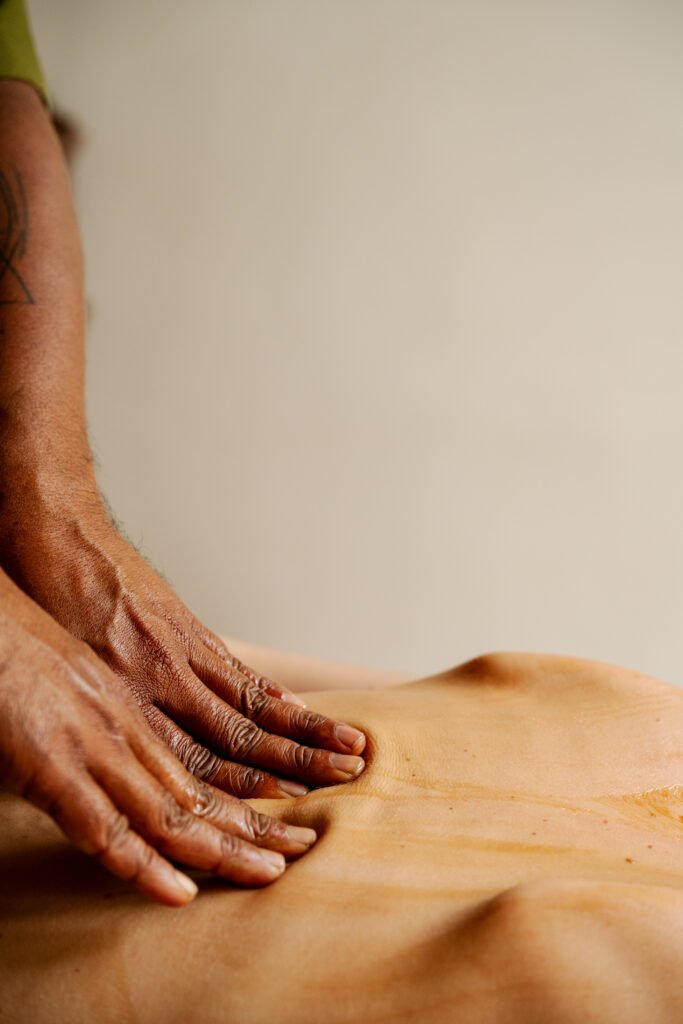

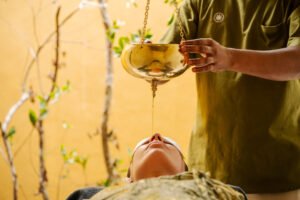
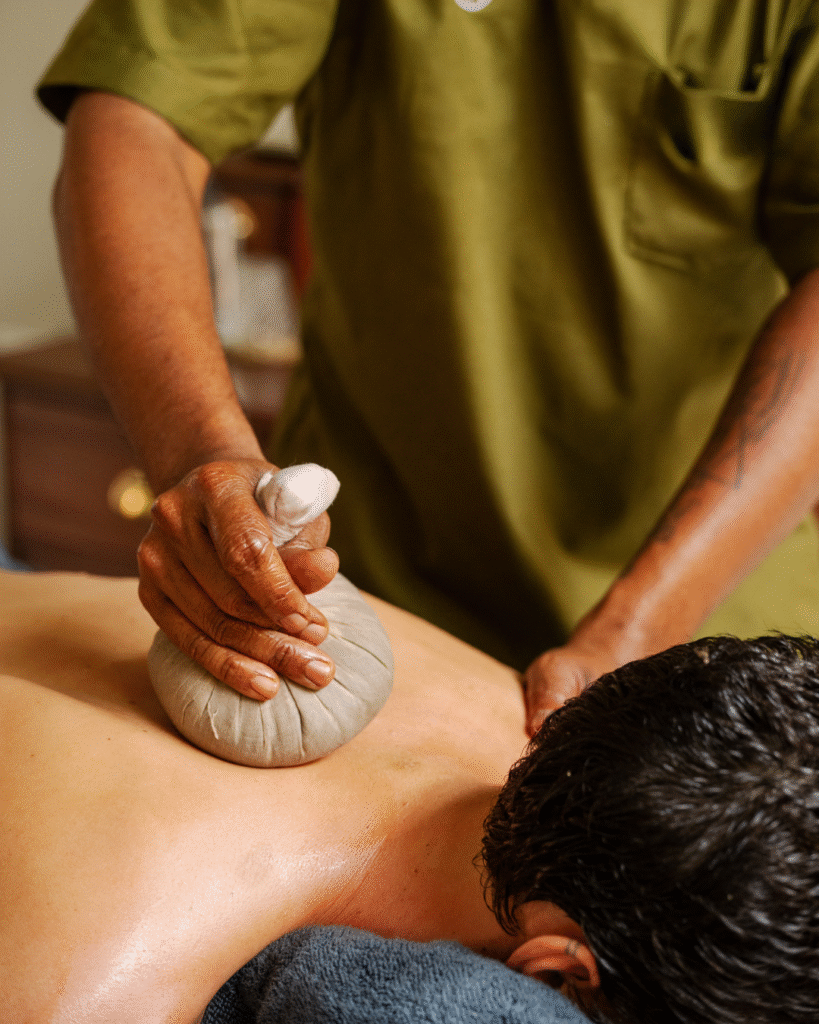
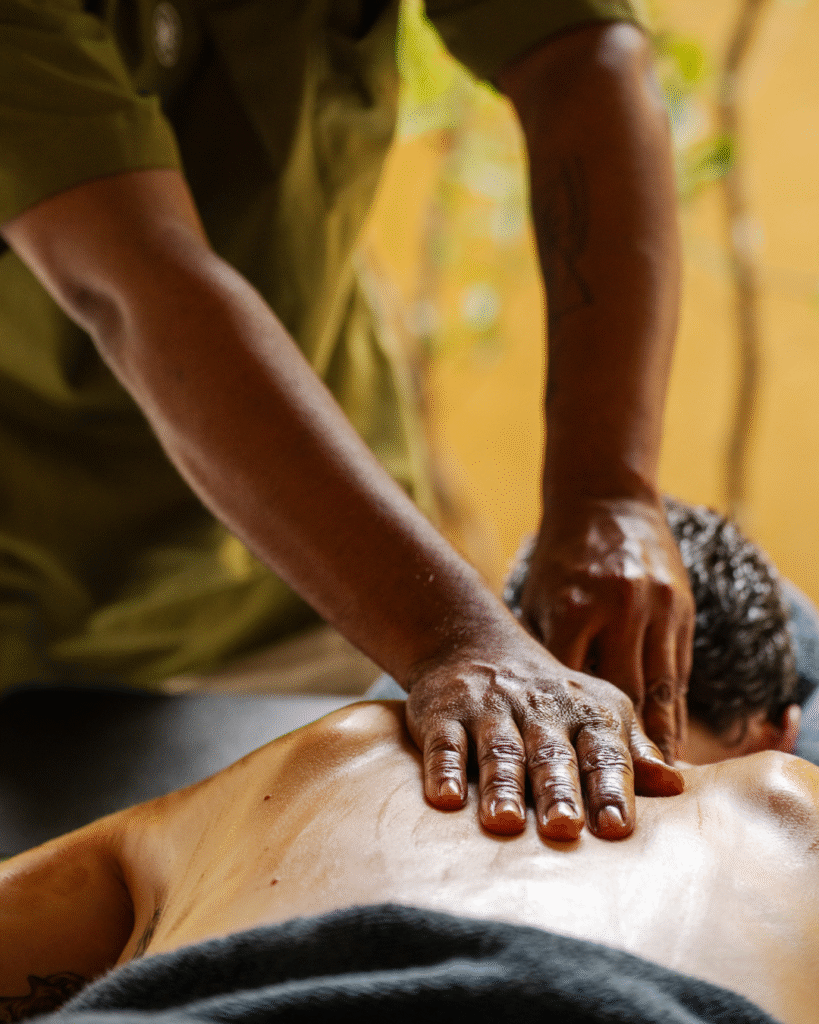
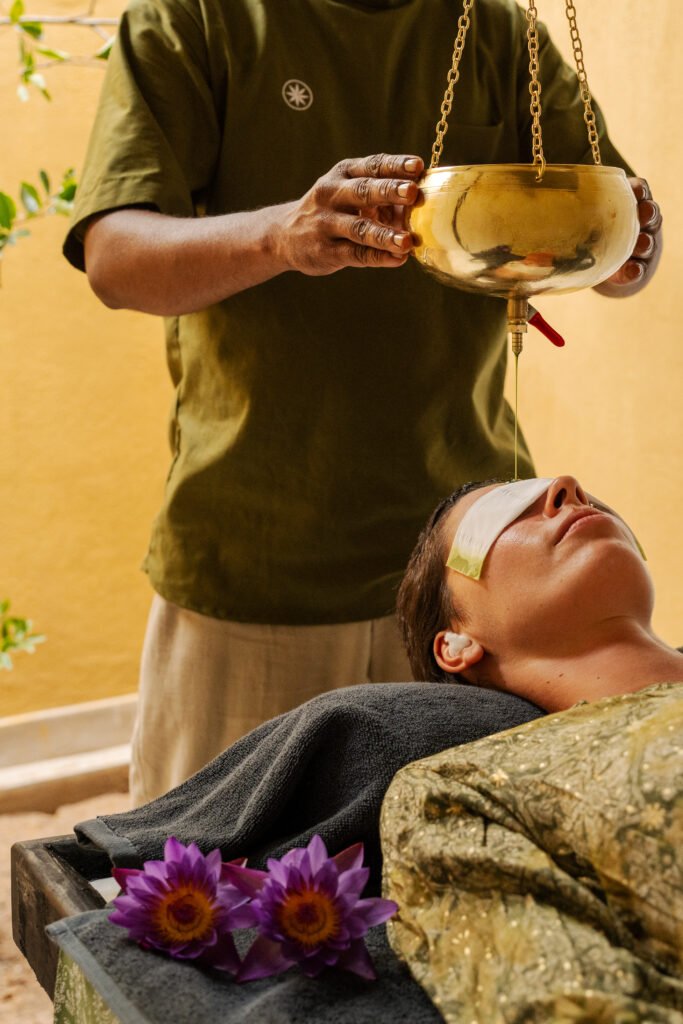
There is a treatment called abhyanga – warm medicated oil, worked slowly into the whole body.
Guests assume it is a massage. It isn’t, quite.
Sustained stress in Ayurvedic terms is a vata disorder: an excess of air and space. Dry, light, cold, quick, erratic. Which is a rather good description of someone under long strain – the racing thoughts, the cold hands, the sleep that arrives and then leaves at four in the morning.
You do not treat that with more stimulation. You treat it with its opposite. Warmth. Weight. Slowness. Something heavy and unhurried applied to the body, over and over, until the system stops flinching.
The Sanskrit word sneha means both oil and love. The old physicians were not being poetic. They had noticed that the thing which soothes a frightened animal is the same thing that soothes a frightened person – and that the body does not much distinguish between the two.
And then, the third day
Nothing has been cured. No toxins released, whatever the wellness industry would like you to believe.
What has happened is that a body braced for a very long time has finally been given enough consecutive evidence of safety to begin, cautiously, putting its hands down.
That is the entire mechanism.
And a group of physicians, working on the coast of an island in the Indian Ocean, wrote down how to produce that evidence – reliably, in a specific order – a very long time before anyone thought to name the hormone.
They were not mystics. They were careful observers of the human body, and they were right.
Today, modern physiology provides names for many of the mechanisms Ayurveda described centuries ago. We speak of the autonomic nervous system, parasympathetic activation, circadian rhythms, and restorative sleep. Ayurveda simply observed these patterns through experience, giving them a different vocabulary.
At Rekawa, we don’t see these perspectives as opposing one another. We see them as complementary. Ancient wisdom provides the philosophy; modern science helps us understand why it works. Together, they create an approach to wellbeing that is both deeply rooted and increasingly relevant to the way we live today.
Sometimes recovery doesn’t begin with doing more. Sometimes it begins when the body is finally given permission to stop protecting itself.