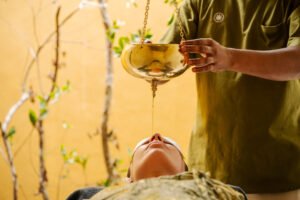
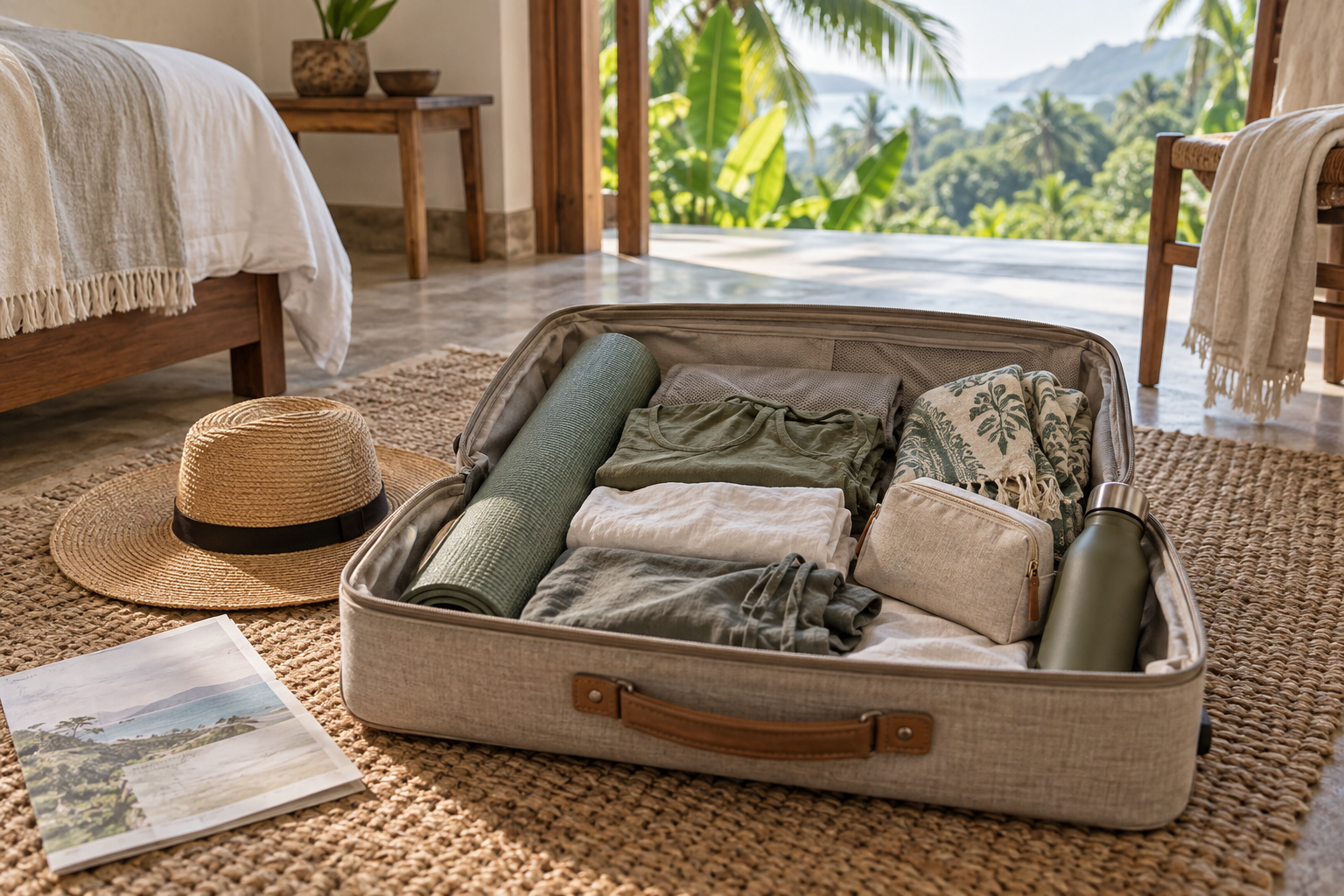
Packing for a retreat is different from packing for a city break. The aim is not to bring every possible “wellness” accessory; it is to arrive comfortable, prepared and light enough to settle in. A few useful layers, the documents you genuinely need and the confidence to ask a question before you fly will take you further than an overfilled suitcase.
Rekawa is on Sri Lanka’s southern coast near Tangalle, where a retreat can combine yoga, treatments, meals and time outdoors. The island’s weather changes by coast and season. Sri Lanka Tourism describes a tropical climate shaped by two monsoons, and its beach guide says the south-west coast is generally sunnier and calmer from November to March. Treat that as broad context, not a personal forecast: check the Sri Lanka Department of Meteorology close to departure, and bring a little flexibility.
Here is a practical way to pack without making assumptions about what the resort provides.
Start with the essentials
Put these items in your hand luggage or somewhere you can reach easily. They are the things that make a delayed bag much less disruptive.
- Passport, travel insurance details and copies of both stored securely online.
- Visa or entry documentation, checked on the official Sri Lankan ETA website shortly before travel. Entry rules, fees and eligibility can change; do not rely on a social-media post or an old blog.
- Flight, accommodation and transfer details, including the phone number you would call if plans change.
- A bank card, a small amount of local spending money if you prefer to carry it, and a secure way to keep valuables close while travelling.
- Prescription medicines in their original packaging, plus enough for the whole stay and a modest delay. Bring the prescription or clinician’s letter if it would help explain a medicine at the border.
- Glasses, contact lenses and any personal medical items you rely on.
- A reusable water bottle for the journey, filled only after airport security.
The official ETA site currently says a passport should be valid for at least six months from arrival, but immigration requirements are exactly the kind of fact that should be checked again just before booking and again before departure. Link to the official source rather than freezing a rapidly changing rule into the article.
Clothes that work for a real retreat day
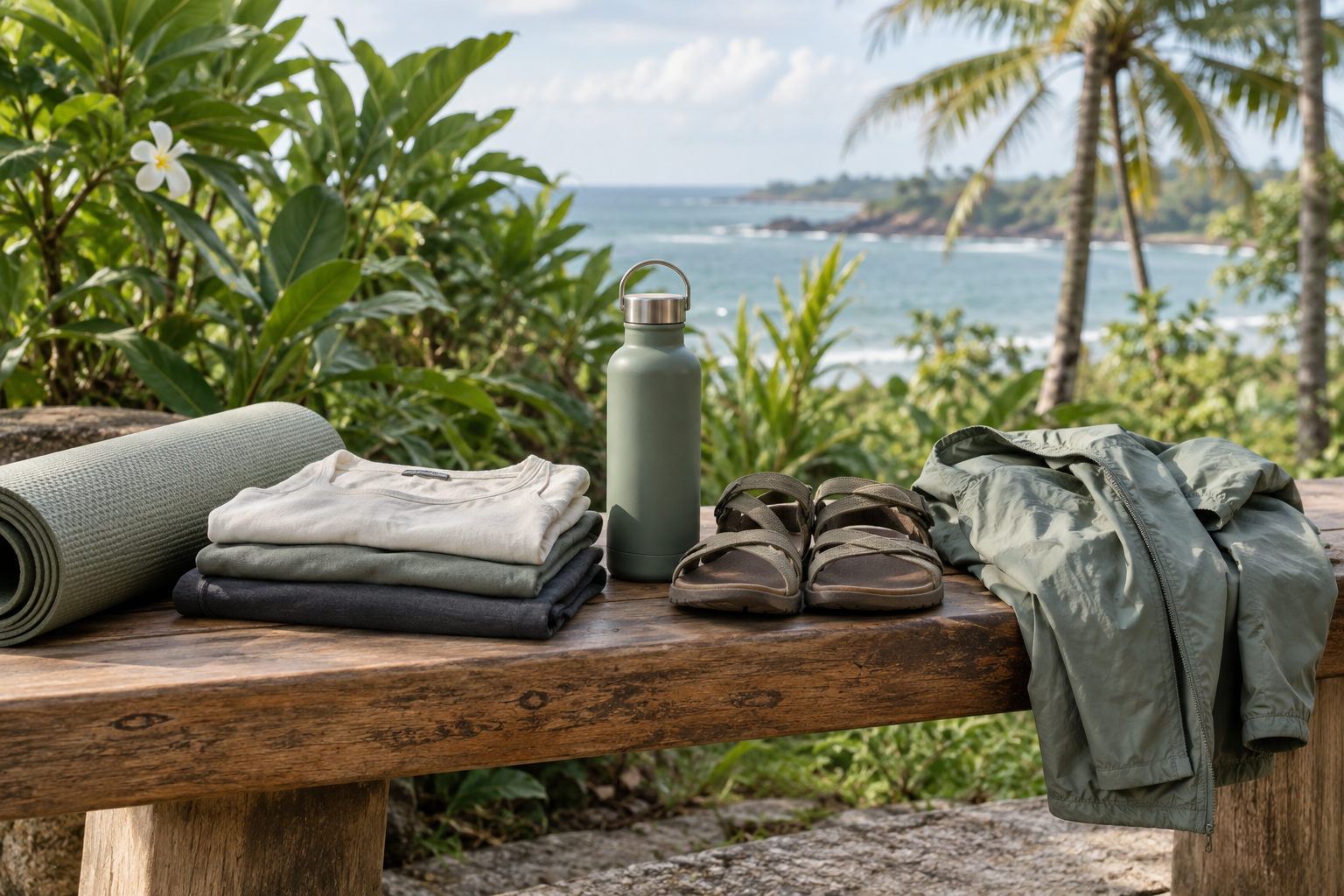
Think in combinations rather than outfits. You may move from a morning class to breakfast, a treatment, a walk, a shower and a relaxed evening without needing a costume change for each moment.
Pack breathable, easy-to-wash clothing that does not restrict movement. Two or three outfits suitable for yoga or gentle movement are usually more useful than a large stack. Choose tops and bottoms you feel comfortable adjusting in, and include at least one light layer for early mornings, air-conditioned travel or a cooler spell of rain.
For outdoor time, add a sun hat, sunglasses and a lightweight cover-up. A small rain layer or compact umbrella can earn its place, especially outside the drier months. Comfortable sandals are useful around the property, while a pair of closed walking shoes may suit excursions or uneven ground. Do not assume a particular class, hike, beach walk or excursion is included: ask what is planned for your dates.
It is also considerate to bring clothing that is comfortable and respectful for local settings, especially if your visit includes a temple or a community activity. Sri Lanka Tourism’s travel tips remind visitors to treat religious sites and Buddhist imagery with respect. The specific requirements can vary by place, so cover shoulders and knees when appropriate and follow local guidance on the day.
What to wear for yoga
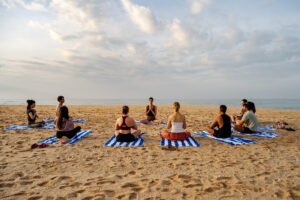
You do not need specialist retreat wear. Soft, non-transparent clothing that stays in place when you bend or stretch is enough. If you are new to yoga, comfort is more important than looking experienced. The US National Center for Complementary and Integrative Health advises beginners to start slowly, choose an appropriate class and ask for modifications rather than pushing through pain.
Before you pack a mat, blocks, straps or a bolster, ask Rekawa what is available for your particular programme. That avoids carrying bulky equipment unnecessarily and prevents the article from promising something the resort does not currently provide.
Personal care: pack for yourself, not for a fantasy version of you
A retreat can be wonderfully simple, but Sri Lanka’s warmth, sun and outdoor setting mean a few personal-care basics are worth bringing:
- Sunscreen that suits your skin, and after-sun care if you use it.
- Insect repellent appropriate for the destination and your own health circumstances.
- Your usual toiletries, because room amenities and brands should be confirmed with the resort rather than assumed.
- A small first-aid kit for your personal use, such as plasters and any familiar over-the-counter items you normally travel with.
- A laundry bag for damp swimwear or exercise clothes.
- A lightweight day bag for a water bottle, hat, phone and any personal medication.
If you have any personal preferences for treatments or meals, let the resort know before you arrive so the team can help make your stay feel easy and well considered.
Ask these questions before you close the suitcase
The most useful packing tip is often a short email. A few clear questions can prevent both overpacking and awkward surprises.
- What yoga props, towels and drinking-water arrangements are available for my stay?
- Are toiletries, hairdryers, laundry and a safe for valuables provided in my room?
- What is the current transfer arrangement, meeting point and luggage allowance, if I have booked one?
- Are there any activities for which I need closed shoes, a swimsuit, a scarf or a particular form of clothing?
- What plug type and voltage should I plan for, and are adapters available to borrow or buy locally?
- Can the kitchen cater for my allergy or medical dietary requirement, and how is cross-contact managed?
- Who should I tell about an injury, pregnancy, medication or a condition that could affect yoga or a treatment?
Those questions are not fussy. They help the team prepare and make it easier for you to relax on arrival.
A printable, no-fuss checklist
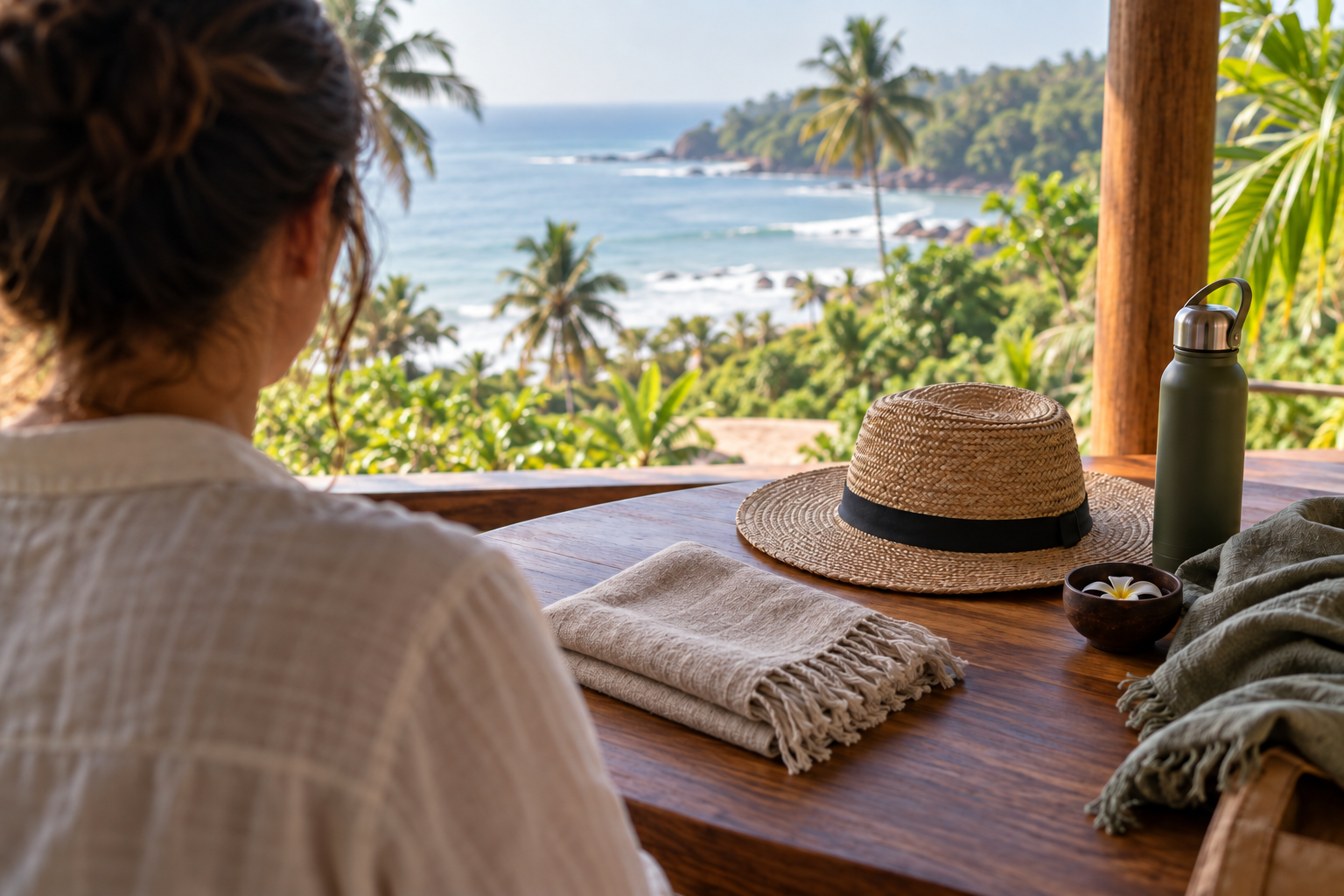
Copy this section into your notes app or print it before you leave.
Essentials
- Passport, insurance and entry documents
- Phone, charger and any needed adapter
- Prescription medicines and copies of prescriptions
- Cards, spending money and emergency contacts
- Flight, accommodation and transfer details
Retreat clothes
- Yoga or movement clothes
- Light layer for mornings and travel
- Relaxed daytime clothes
- Comfortable sandals
- Closed walking shoes if your confirmed plans need them
- Swimwear only if you expect to use it
- Sun hat and sunglasses
- Lightweight rain layer
Personal care
- Sunscreen and insect repellent
- Toiletries you cannot do without
- Reusable water bottle
- Laundry bag
- Small personal first-aid supplies
Worth confirming, not assuming
- Yoga mat and props
- Towels and toiletries
- Laundry service
- Transfers
- Excursion equipment
- Diet and allergy arrangements
- Treatment suitability and any practitioner consultation
A lighter bag, a calmer arrival
You do not need to arrive already transformed. You only need enough to be comfortable while you settle into the rhythm of the place. Pack the clothes you like to wear, keep medical and travel essentials close, and leave room in the case for the unplanned part of the journey: a book, a market find, perhaps simply the relief of returning home with less than you brought.
For up-to-date practical information about your dates, programme and any particular needs, send Rekawa an enquiry. The team can confirm the current arrangements before you travel.